Speakers
KEYNOTE Being in the Same Place Twice: Administration as a Feminist Knowledge Practice
Kate Rich, Cofounder of IBEX (Institute for Experiments with Business) & Marie Skłodowska-Curie Fellow at the Alpine Community Economies Lab (Italy)
Behind every collective project lies a less visible world of administration, maintenance, infrastructure, and care. For over three decades, Kate Rich has made this overlooked terrain the focus of her work. In this presentation she asks what becomes possible, when the back office is treated as a site of experimentation.
Kate Rich is a trade artist and feral economist. From 2003-23 she ran Feral Trade, a long-range economic experiment moving coffee, olive oil and other vital goods along social routes and outside commercial systems. She worked for two decades in the all-volunteer Cube Microplex in Bristol, co-organised RADMIN, Britain’s first Festival of Administration (2019), and convenes the Feral MBA, a radically reimagined business school for artists and others (2020-ongoing). Kate is co-founder of the Institute for Experiments with Business (IBEX) and is currently Marie Skłodowska-Curie Postdoctoral Fellow at Brave New Alps, Italy.
Informed Decisions: A Case Study
Donna Metzlar, Genderchangers.org / Eclectic Tech Carnival (/etc) & the Systerserver.net (Netherlands)
I stepped into the information technology and open source world in my early 30’s. On the day of the event I will share the story and reflect on recurring themes. The material world has changed but the values I hold dear not so much.
I grew up in apartheid South Africa and moved to the Netherlands at the beginning of the ’90s. I became a nurse but switched to IT work in the ’00s. Besides my day jobs, I participated in a number of different movements: environmental, feminist and housing. Initially I was a member of was the Cape Town Ecology group. Inevitably, I got caught up in the digital revolution. This led me to start and maintain a number of projects, which I am still involved in today. At the moment I work for a data lab in a college in Amsterdam, as system administrator and information security officer. peerpool.org | The Genderchangers Academy | Systerserver.net | /etc
Institutioning Otherwise; Admin After Microsoft
Audrey Samson: Cofounder FRAUD, Stanley Picker Fellow, Kingston University (UK) erg école de recherche graphique BX
I discuss how erg (école de recherche graphique) has moved away from normative, proprietary digital platforms and toward free software not only for teaching, but for its entire administrative structure. What modes of inhabiting these new structures and maintenance routines have emerged? As an institution, the digital tools our school employs reflects a desire to facilitate collaborative work and action—specifically, collective reading and writing. Free software encourages rewriting as a deliberate choice, a transversal and collective pedagogy. In this short presentation I will tell stories and anecdotes about tending our institutional infrastructure.

Audrey Samson is an artist-researcher, currently a Stanley Picker Fellow and a member of the duo FRAUD. She is a professor in More-Than-Computational Arts at l’École de Recherche Graphique (ERG). She explores the intersection of technology and critical ecologies.
Current investigations frauds.site | école de recherche graphique
Open Wireless Community Mesh Networks: Pico-peering, Mutual Aid, Resilience and a Digital Glass of Water for Everyone
Elektra Wagenrad, Freifunk.net (Germany)
Based on pico-peering, mutual aid and engineering mesh-networking technology, open wireless community networks are providing a digital glass of water for everyone. Communities such as Freifunk.net are providing open source software and technology for empowering communities.
Elektra has played an active role in the development of mesh technology for community networks within the Freifunk initiative, and has also provided training on the use of Wi-Fi technology in Bangladesh, India, Chile, Tanzania, and South Africa. She is the author of the book ‘Mesh’ and co-author of ‘Wireless Networking in the Developing World,’ which is published under a Creative Commons license. Working as a software and hardware developer, Elektra notably developed the B.A.T.M.A.N. routing algorithm for Freifunk networks, as well as the ‘Mesh Potato’—a wireless router designed for ad-hoc wireless networks in developing and emerging countries. In her philosophical writings, Elektra critiques the phenomenon of ‘bicameral consciousness,’ in which many individuals become alienated from themselves through an imagined ‘alter ego’—a construct that assumes various roles and with which they engage in internal dialogue within the frontal lobes of the brain. She also hosts programs for Freifunk Radio and the ‘Mikro.fm’ series on the platform Collaboradio Collaboradio
Counteracting the Large Linguistic Misogyny Project
Selena Savić, University of Amsterdam(Netherlands)
There is a documented tendency of LLMs to generate false, hurtful or imprecise information about women. I examine errors, bias and ‘hallucinations’ by large language models (LLM) as artifacts of their training. I discuss conversational methods to identify and interpret harmful patterns in LLMs. Through interpretative analysis, I read these errors as a way that LLMs index training data bias. Building on critical data studies and feminist theory, I propose an ethical and methodological framework for critical prompting as a research tool, and show how generative AI can be creatively misused to cultivate resistance.
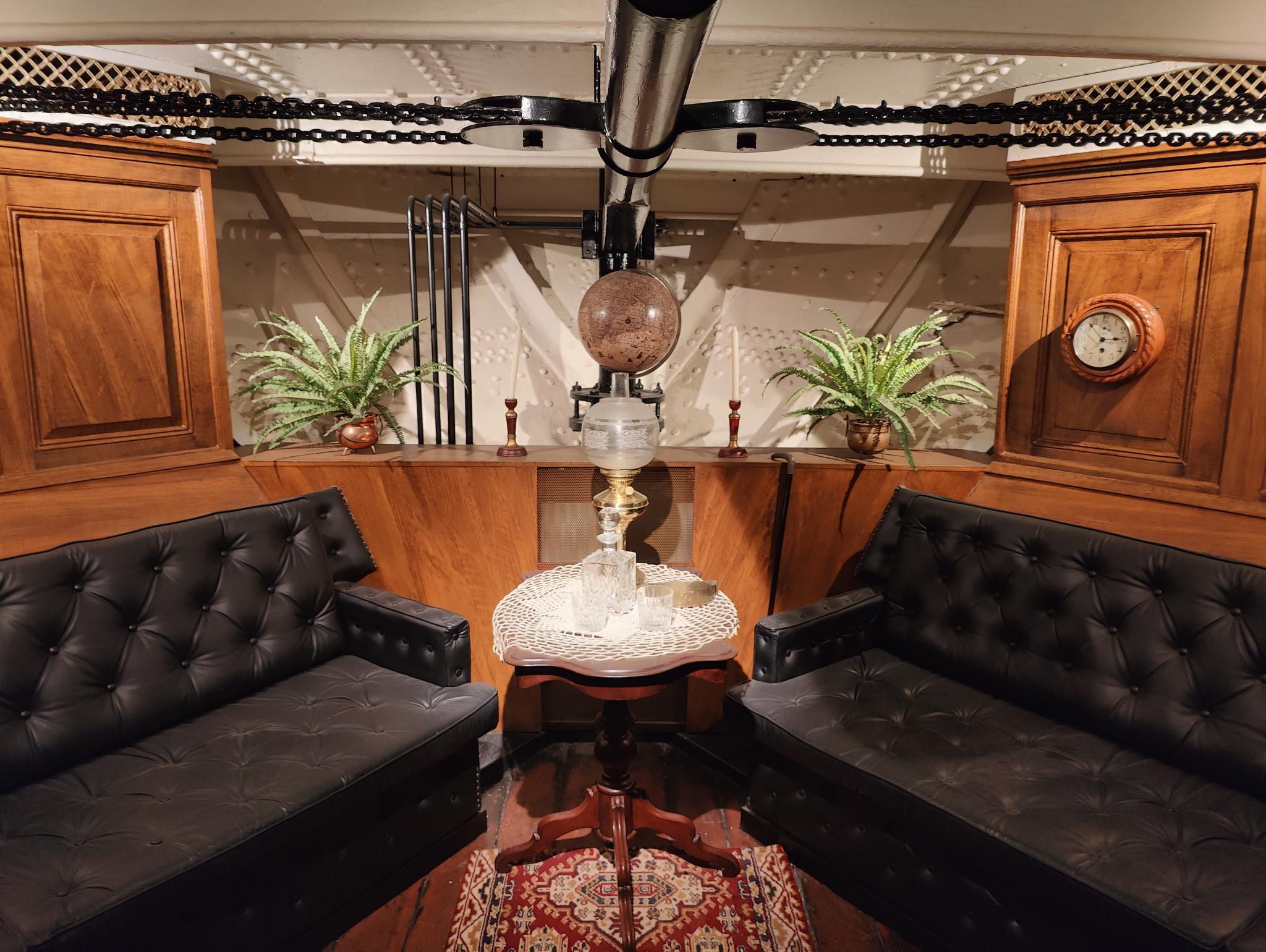
Selena Savić is an Assistant Professor for Proto-history of Artificial Intelligence and Machines in the Arts at the University of Amsterdam. After completing her PhD at EPFL and a postdoc fellowship at ATTP, TU Vienna, she led the Make/Sense PhD programme for practice-based research in art and design at the Basel Academy of Art and Design. She works on critical and creative approaches to data, at the intersection of computational processes and postcolonial critique of technology. She researches, teaches and writes about digital archives, computational modelling, feminist materialism and posthuman networks in the context of art, design and architecture.
HOST UR, Now All Tomorrow’s Parties, Say YEAH!
Teresa Dillon, Winchester School of Art, University of Southampton (UK)
HOST UR, Now All Tomorrow’s Parties, Say YEAH! is a performance lecture that casts hostipitality in relation to contemporary agentic contexts and explores guest-host relationships as forms of infrastructure space stewardship. Across various works in the 1990s and early 2000s, Derrida created the word ‘hostipitality’ a combination of hospitality and hostility to capture his thinking on host-guest relations. Derrida was particularly interested in the performative acts that underpin such relations and the unspoken rules, self-contradictions and limits that play out in acts of welcoming. Since 2013, under the umbrella of Urban Hosts, these unspoken rules have become the conceptual backbone of a salon style programme that focuses on what the architect and writer Keller Easterling (2014) refers to as the infrastructure spatial matrix, that is protocols, hard- and software that increasingly extend state influence by shaping decisions around access and mobility. Touching on the affective fall out of this extrastatecraft, as part of Urban Hosts, a bunch of ad-hoc “expansions” creative interventions, performances, XOIR connects responded to such world building, which has in the preceding years evolved as Fifth Generation telecoms, vibrates alongside artificial agents. This performance lecture explores these directions in relation to guest-host relationships and infrastructure space stewardship.
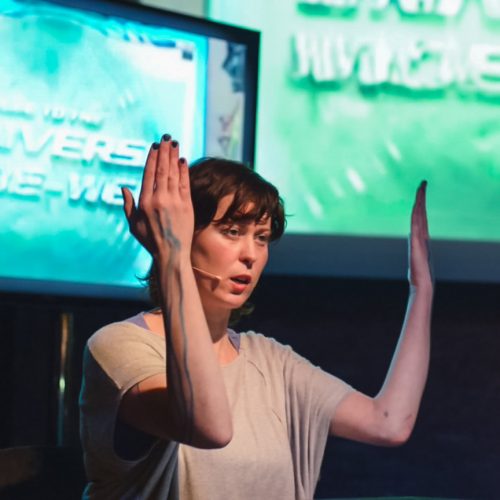
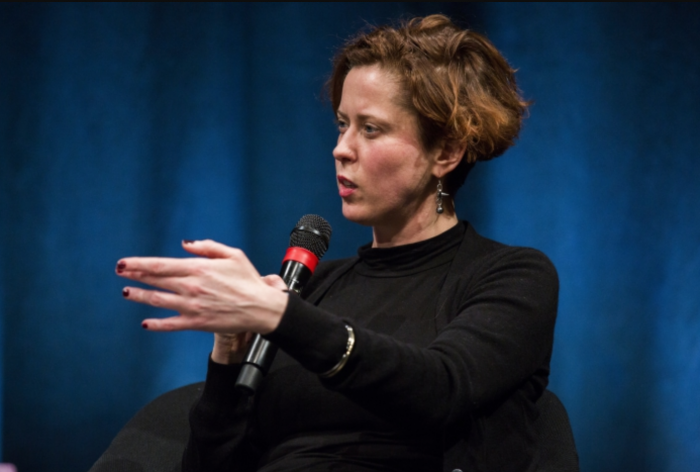
Teresa Dillon is an artist and researcher and Professor of Art, Media and Spatial Practice at Winchester School of Art, University of Southampton. With a background in performance, live art, media and psychology, she has been making art and carrying out research on digital cultures since the early days of the Netscape browser. Her works, conceptually evolve over multi-year cycles, spawning various irritations that often link together under umbrella programmes such as Urban Hosts (2013-), Repair Acts (2018-), In Your Aerial and Resonate Ecologies (2019-). She has a longstanding interest in techno-civic relations, infrastructures and contemporary urbanism, with a focus on collective and conversational formats, restorative futures, computational, Internet, sonic and surveillance histories and ritual practices in post-human law. With current research exploring discarded tech, infrastructural ruin, media slag heaps and digital twins in relation to practices of repair, maintenance and healing. polarproduce.org|repairacts.net|urbanhosts.org
Estrid Sørensen, Ruhr University Bochum (Germany)
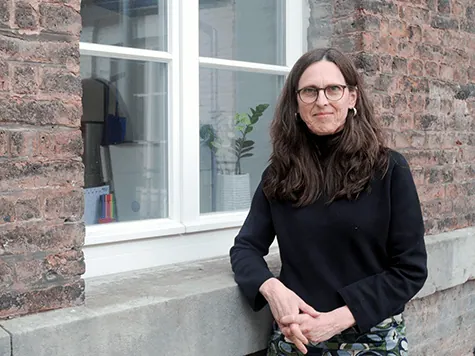
Respondent Estrid Sørensen is a professor for anthropology of knowledge at Ruhr University Bochum. She has conducted research within a wide field of science and technology studies, including educational technologies, media harm discourses, cyber security, digital methods and most recently she has turned towards researching data infrastructures. Her ethnographic and historical research addresses scientific data centres and high-performance computing and inquires the co-enactment of knowledge production and planetarity. Rustlab